What Is Gauge in Knitting? The 16cm Swatch That Fits
 By Fernando Santos
A knitting pattern is a set of directions. Gauge is what makes those directions come out in your size rather than somebody else’s. It is one small square, knitted before the cardigan, and it takes fifteen minutes. Here is what it is, why I never skip it, and what our patterns do with your numbers once you have them.
What gauge actually is
Gauge, or tension if you learned to knit in the UK, is simply how big your stitches come out. It is usually written as two numbers: how wide one stitch is and how tall one row is. Every pattern on earth is written assuming a particular gauge, and every knitter produces a slightly different one, because how tightly you pull the wool is as personal as your handwriting.
In fine yarn this is a small rounding error spread over two hundred stitches. In chunky knitting it is the whole game. One of our stitches is roughly 3cm wide, so the back of a Regular M is only 20 stitches across. If your stitches come out 2mm wider than mine, that back grows by 4cm, and the whole cardigan by closer to 8cm around the chest. Same pattern, same wool, noticeably different cardigan. This is why I say a pattern promises stitch counts, not centimetres: the centimetres come from checking your own tension first.
Why your tension is personal, and your method matters even more
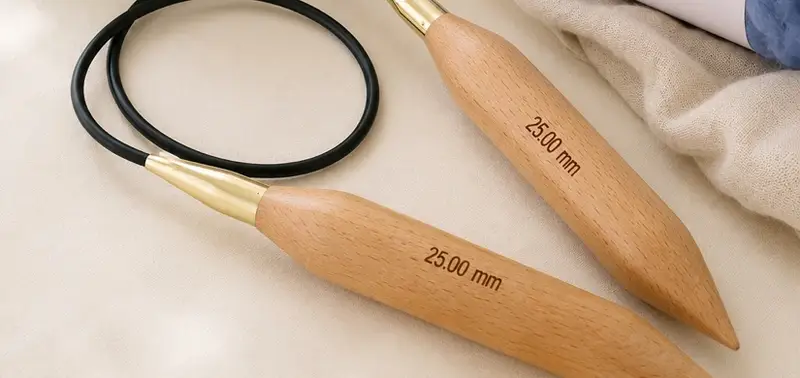
Two things set your gauge. The first is your hands. Some people knit tight, some knit relaxed, and neither is wrong. The second is bigger at this scale: whether you knit on needles or with your fingers. The same wool, worked by the same person, comes out differently on 25mm needles than it does finger knitted, because your fingers and a needle tip make differently shaped loops.
You can see it in our own numbers. On 25mm needles my stitches come out about 3.2cm wide and 2.0cm tall. Finger knitted, they are nearer 3.0cm wide. That gap of a few millimetres per stitch, multiplied across a cardigan, is a full size. So “what is your gauge?” really means “what do your stitches measure, with your method, in the wool you are actually using?”. There is exactly one way to find out.
Chunky wool likes a relaxed tension
Before you knit the swatch, one thing about which tension to aim for. Chunky wool is friends with a relaxed hand. Knit it too tight and the fabric stops being a soft cloud and just gets stiff, closer to armour than to knitwear: it stops draping, and that is not what you bought giant wool for. Chunky likes to breathe.
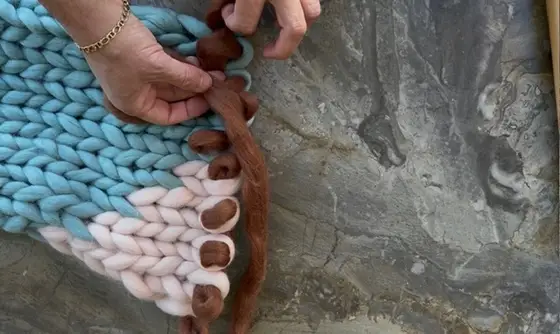
In my personal experience, finger knitting is always one step away from tightening up, so I have to stay mindful of it. On needles you have full control, and my habit is two extra gentle pulls of slack on each stitch to keep everything soft and nice. With your hands, what happens before and after the stitch matters just as much as the stitch itself. Bring each new stitch close to the one before it (I say the new stitch should kiss the previous one), because that is what makes your rows look defined. And hold the previous stitch as you form the new one, so the wool travels into it in a controlled way. Do those two things and a relaxed tension of about two fingers is always possible.
Then check yourself early. At about five stitches into a row, stop and compare them. Consistency is the whole look at this scale: if one stitch is noticeably larger, chances are you will frog that row (unravel it) and start it again, and that is the cheap moment to do it. Get distracted and you can knit a whole cardigan before you notice, and by then it is too late. I have written about both habits before: the kiss trick and my own frogging confessions are in the finger knitting post, and the honest word on consistency is in the six-steps walkthrough.
How to knit a gauge swatch in chunky wool
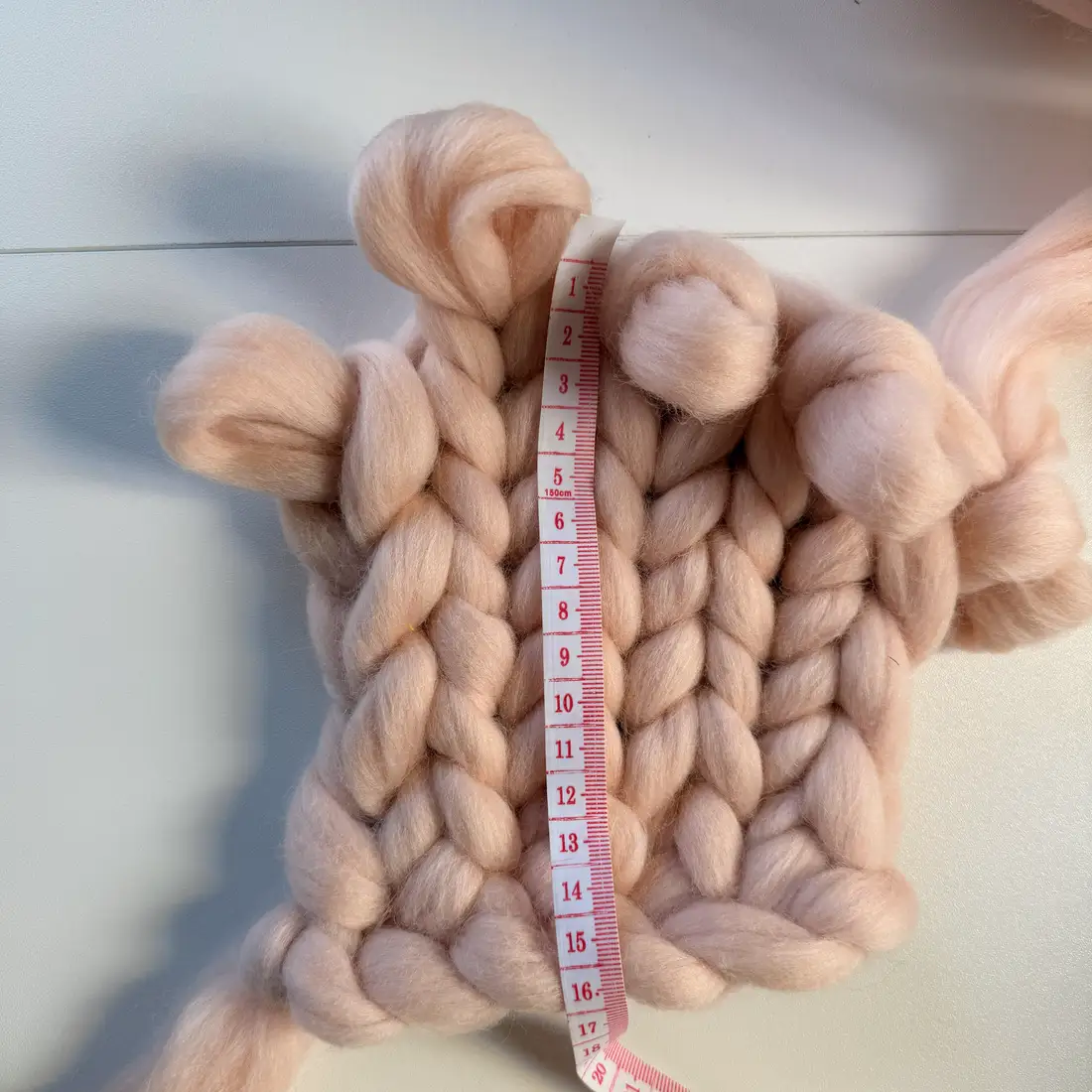
In fine yarn a tension square is 10cm by 10cm. In chunky wool that is barely three stitches, so I make mine bigger: about 16cm by 16cm. At our scale that is a cast-on of 5 or 6 stitches and 7 or 8 rows, which is genuinely a fifteen-minute job and uses wool you simply unravel and reuse afterwards.
- Cast on 5 or 6 stitches in the wool you will actually use, with the method you will actually use, fingers or needles.
- Work 7 or 8 rows in plain stocking stitch, the same stitch as the cardigan.
- Take it off the needle (or your fingers) and lay it flat on a table. Let it sit as it wants to sit. No stretching, no smoothing it wider.
Knit the swatch at the speed and mood you will knit the cardigan. A square knitted while concentrating fiercely on being “correct” measures differently from the relaxed evening knitting that follows it.
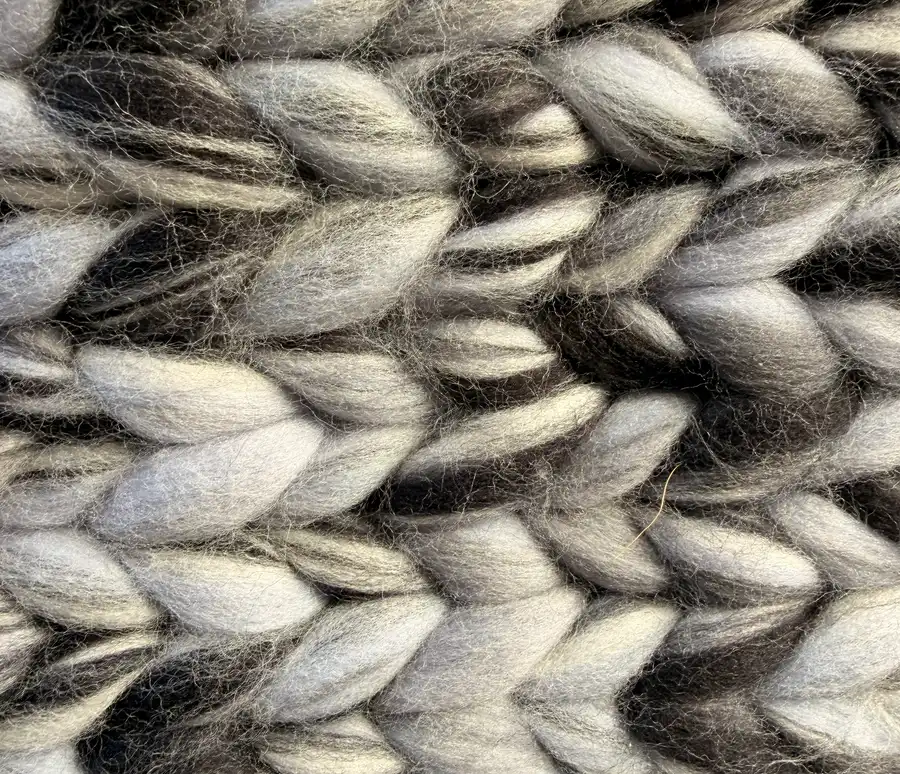
How to measure it: two divisions, two numbers
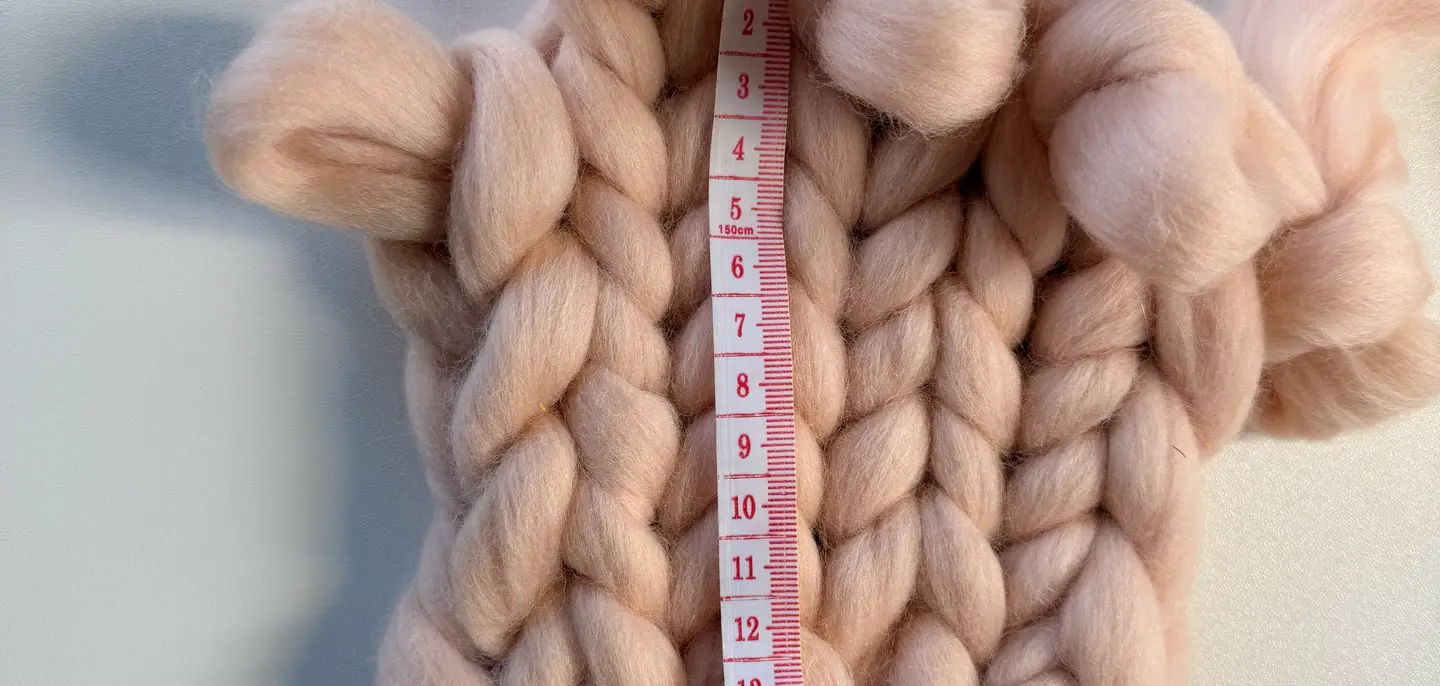
Lay the tape across the middle of the square, because the edge stitches curl and lie. Then it is two small sums:
- Stitch width: measure the width in centimetres and divide by the number of stitches. A 16cm swatch of 5 stitches means each stitch is 3.2cm wide.
- Row height: measure the height and divide by the number of rows. 16cm over 8 rows means each row is 2.0cm tall. (Those happen to be my numbers, measured on a finished cardigan; yours are the point.)
That is your gauge. Write both numbers down somewhere you will find them again, because they are yours: they will barely change from project to project as long as the wool and the method stay the same.
What a Gigante pattern does with your numbers
This is the part I am genuinely proud of. On every pattern page there is a gauge picker, and the recommended option is “Measure your own swatch”. Type in what your square measured and how many stitches and rows it held, and the pattern rewrites itself around your tension: every cast-on, every stitch count, every row count, the finished chest and length in centimetres, and the amount of wool. Our motto is “we did the maths, you do the knitting”, and gauge is where it is meant 100% literally: the step-by-step construction guide online and the PDF pattern you download both come out written in your numbers. Not a note in the margin telling you to “adjust to obtain gauge”. The actual pattern.
It works the same on every design and every size, whether you are knitting The Reflection in Soft Pastel, The Wanderer in Midnight or The Colour Block in Electric. If your swatch says your stitches are wider than mine, your version of the chart simply has fewer of them, and the cardigan comes out the size the label promised. If you have never used a pattern before, this walkthrough shows where the gauge section lives on the page.
Knit the swatch once, type in two numbers, and every pattern on the site is written for your hands.
Bought a PDF on Etsy? That gauge is mine. The website makes it yours
The PDF patterns we sell on Etsy are written in our house gauge, because a PDF has to commit to somebody’s numbers and mine are the ones I can vouch for. But the PDF is the start of it, not the end. Every pattern you buy unlocks the same design here on the site, and that unlocked page gives you all 8 sizes (four sizes in each of the two fits), every colourway, and the gauge picker above, so you can re-download the pattern rewritten for your own swatch. Buy it once, and it keeps up with your tension, your size and your colour mood for good.
Two habits for after the swatch
Watch your tension in the round. Our sleeves are worked in the round, and there you have less physical space to move in, so almost everyone tightens up without noticing. It is the one place I pay extra attention: relax the hands, keep the two-finger slack, and compare a sleeve stitch against a body stitch now and then.
Trust centimetres over counting. Do not get too hooked on the number of stitches and rows. If the pattern says the piece is 56cm tall, do not chase that by counting rows alone: stop and lay the tape on it, because even knitting at your own measured gauge there are tiny differentiators along the way, a touch more here, a touch less there. On needles this stays fairly controlled. With fingers it is a bit more work, because you are relying on your hands in a less controlled way, and the tape is what keeps you honest.
Can you skip the swatch?
Honestly? Sometimes. If you are knitting our wool on 25mm needles and you have matched our gauge before, you will probably land close again. And chunky knitting is forgiving: our cardigans are designed oversized, so a centimetre or two of drift disappears into the ease.
But I still knit one every time, including for cardigans I have made ten times, and here is the arithmetic behind that habit. The swatch costs fifteen minutes and no wool, because it unravels back into the project. Skipping it risks discovering on row twenty that the whole body is a size out, and at this scale re-knitting a body is an evening you will feel. Fifteen minutes against an evening is not really a decision.
Keep reading
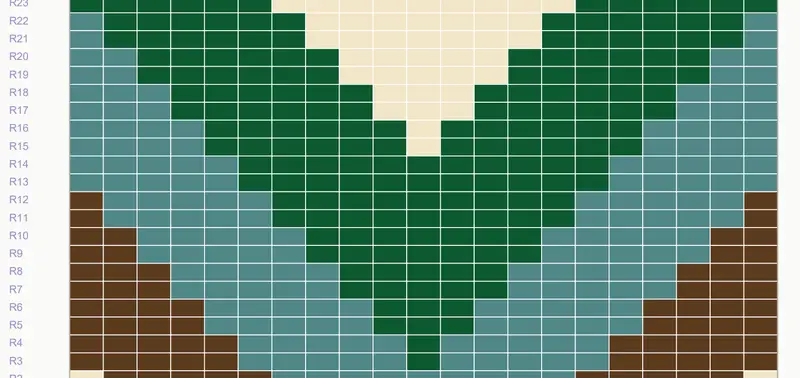
How to Read a Knitting Pattern When You’ve Never Used One
Sizes, gauge, the yarn list and the colour chart, walked through page by page on a real pattern.
Read it next →