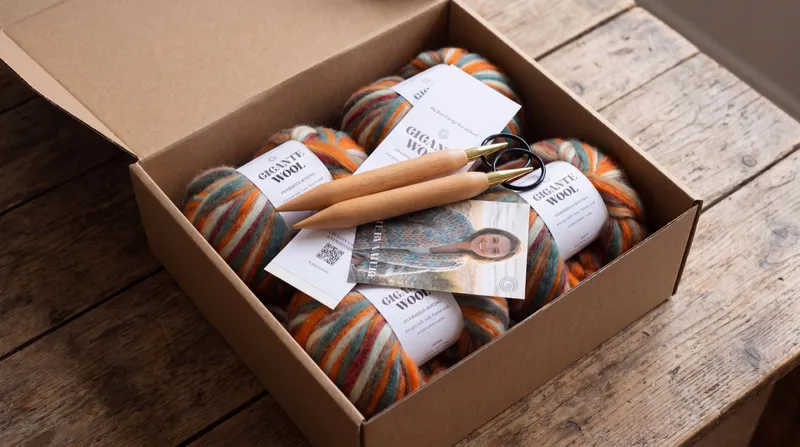
How to Weave in Ends When Knitting with Chunky Wool
The little finishing trick that makes a big difference.
 By Fernando Santos
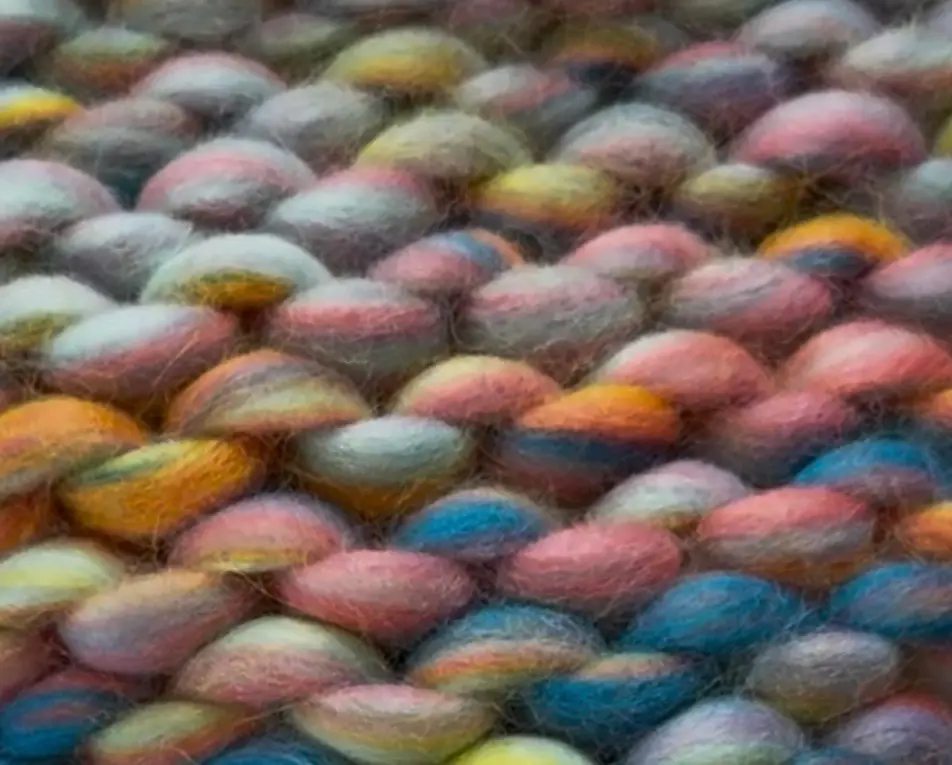
If you've ever knitted with super chunky wool, you'll know that weaving in those ends can be a bit of a challenge! Unlike traditional yarn, chunky unspun wool is beautifully soft, fluffy and wonderfully oversized, which makes hiding loose ends a little trickier.
But don't worry! There's a simple technique I use at Gigante Knits that keeps those ends secure, discreet and beautifully finished. And the secret? It's all about following the natural shape of your stitches.
Meet the As and Us!
Turn your knitting over to the wrong side and take a closer look at those lovely little purl bumps. You'll notice that some look like the letter A, while others look like a U. Well, that's what I call them anyway! It makes remembering how to weave in your ends so much easier.
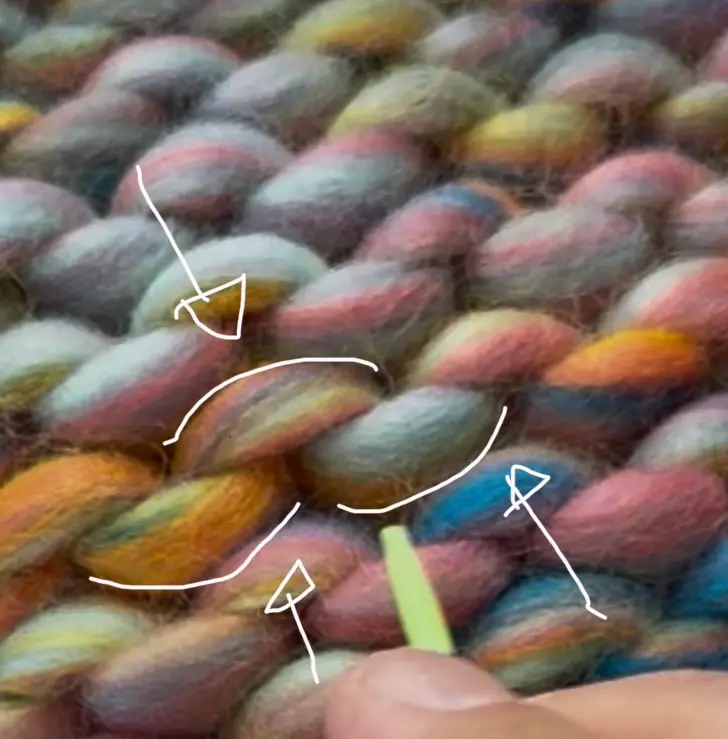
Here's my little rule:
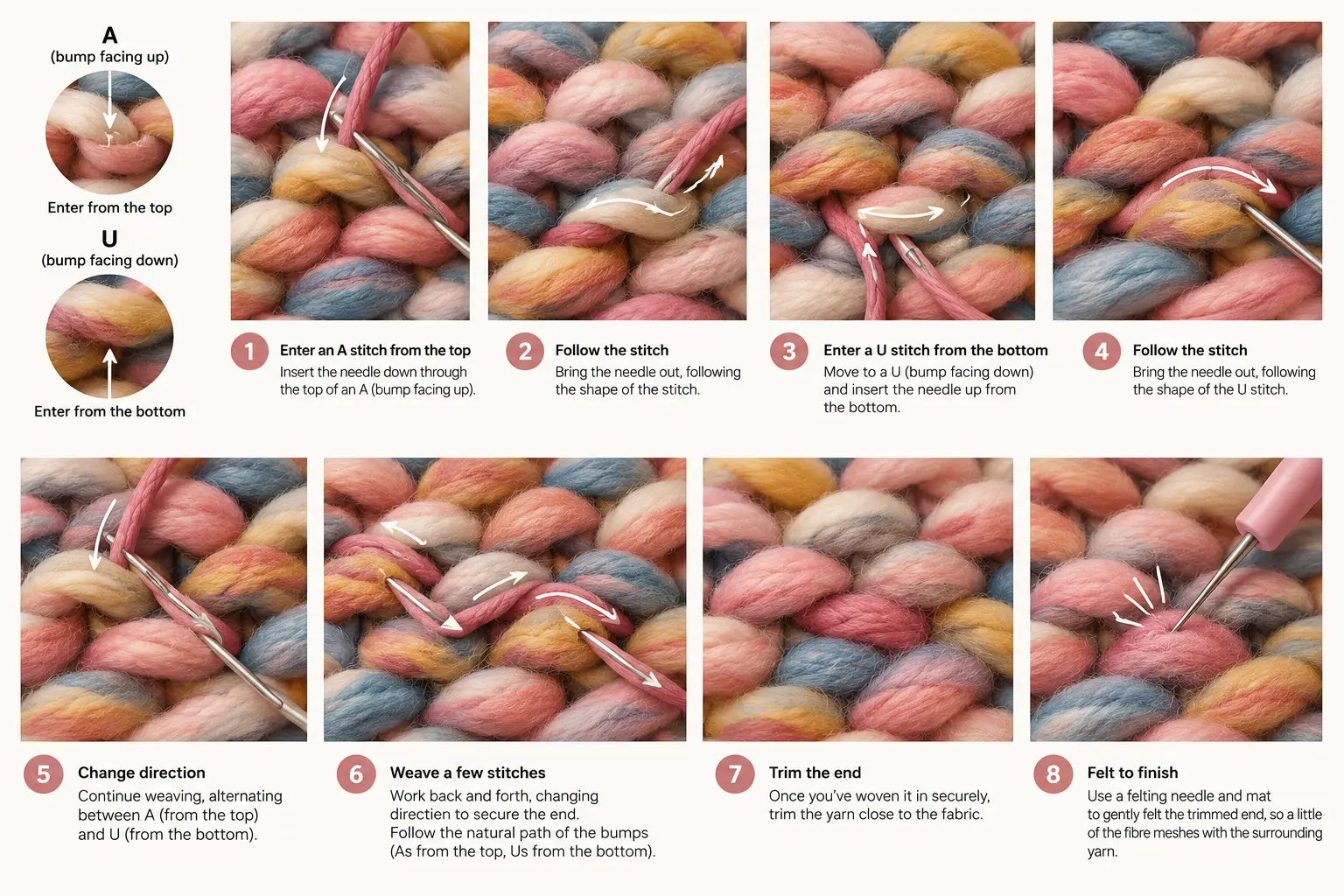
- The As: when the bump faces upwards, enter the stitch from the top, following its natural curve.
- The Us: when the bump faces downwards, enter the stitch from the bottom, following the curve underneath.
The idea is to guide your loose yarn through the existing stitches rather than pulling it straight across the back of your knitting. That way the end blends into the fabric without distorting those beautiful chunky stitches.
I guide the tail through with my felting needle, but your fingers work just as well: the stitches are big enough to tuck the wool through by hand.
Change direction for a more secure finish
Here's another little trick! Rather than weaving your yarn in one straight line, change direction as you go. Work through a few stitches, then turn and weave back through neighbouring stitches, always following the natural shape of the purl bumps. This anchors the loose end more securely, so it's less likely to work its way out when your piece is worn or handled.
And remember, don't pull too tightly! We want to keep the soft, airy texture of the wool.
My secret finishing touch: a little needle felting!
Because we work with natural, unspun wool at Gigante Knits, there's another lovely trick we can use. Once I'm happy with how the end has been woven in, I use a felting needle and a felting mat to gently secure the loose fibres to the surrounding wool.
Place the mat underneath your knitting and make a few gentle, controlled pokes where the loose end meets the fabric. The tiny barbs on the needle make the wool fibres catch and mesh together, which holds the end in place. There's no knot to tie: the felting is the fastening.
You don't need to go crazy with it! Just a little is enough. Too much felting can make your knitting stiff or flatten those beautiful, fluffy stitches. I then carefully trim away any remaining excess yarn.
A word of caution: felting needles are extremely sharp, so always work with a proper felting mat underneath your knitting and keep your fingers away from the needle.
The beauty is in the little details
Handmade knitting isn't about achieving machine-made perfection. It's about celebrating the softness, texture and character of every stitch. But taking a little extra care with your finishing can make a real difference to how your project looks, feels and wears.
Follow the As from above, the Us from below, change direction and finish with a little felting magic!
Watch me do it on Instagram.
Happy knitting!
Need a felting needle, or fancy a fresh project to practise on?
And if you're still deciding whether chunky knitting is for you, our guide on whether a complete beginner can knit a chunky cardigan is the gentlest place to start. Big stitches are wonderfully forgiving, finishing very much included.
Keep reading

The Six Steps to Knitting a Chunky Cardigan (Only Two Are Hard)
The full walkthrough, from cast-on to seams to those final felted ends.
Read it next →