To Block or Not to Block? Chunky Cardigan Aftercare
 By Fernando Santos
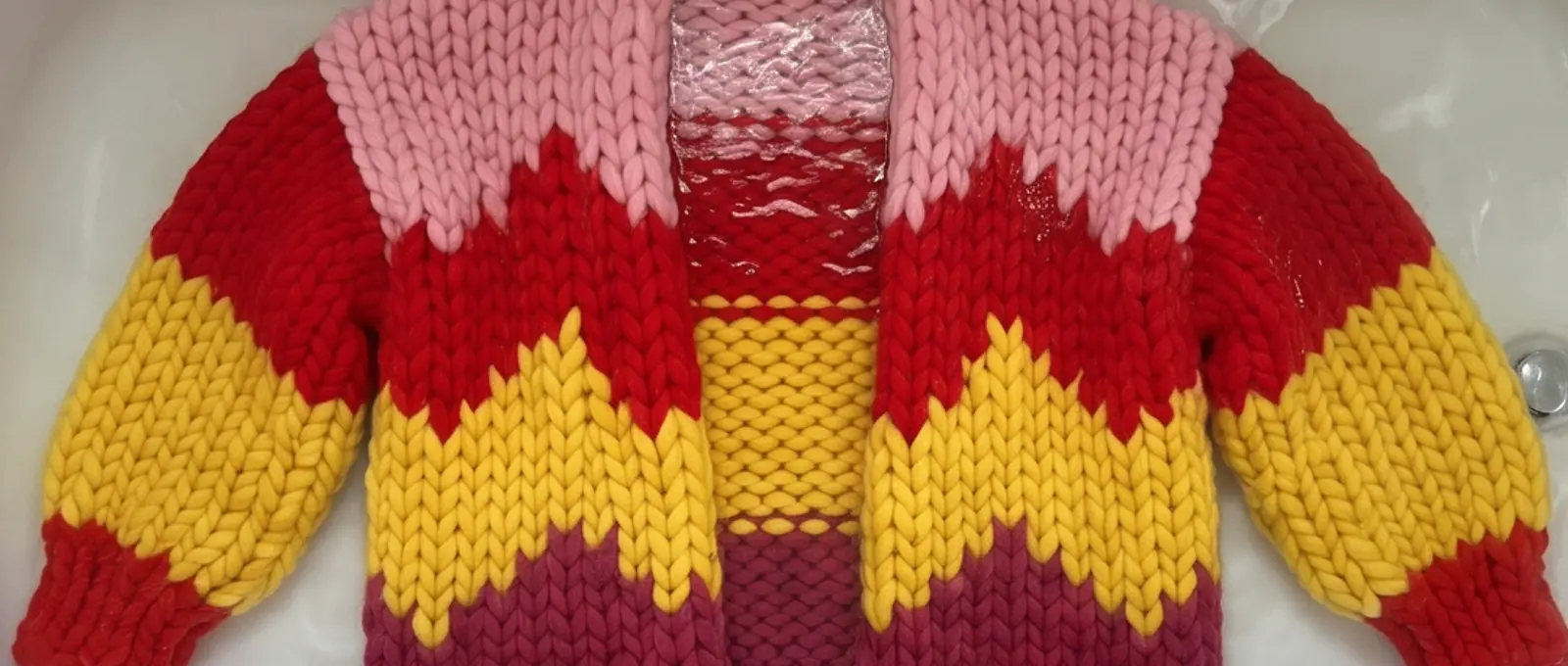
As the designer behind Gigante, this is one of the questions I get most. If you've just finished knitting your own cardigan with our wool or one of our patterns, should you block it yourself before you wear it? And for the finished pieces I knit and send out myself, do I actually block those too, or is that just something I say to sound thorough? Is it genuinely necessary, or is it a bit of an urban legend? Fair questions, and they both deserve a straight answer, not a marketing one.
So here it is: yes to both, and yes, it's real, not theatre. But it's also not a rescue for a mistake, so let's clear that confusion up first. Blocking is the very last thing you do, once a cardigan is off the needles and finished, whether that's you finishing your own or me finishing one to send out. It's not fixing a wonky sleeve or a tight cast-on; it's the finishing step every piece gets, the same way a tailor presses a seam, and skipping it is the difference between a cardigan that settles into its shape and one that never quite does. Below is the exact method I use on every finished piece I make, the honest trade-offs when time is short, and, just as important, the small habit that keeps a cardigan looking right for years after that one finishing step is long done.
What it's actually doing
While you've been knitting, the wool has been under tension: pulled through your fingers, wound round a giant needle, packed with tiny pockets of air trapped between the stitches. Blocking is what lets all of that settle. Wet the fibres, ease the piece into shape, and the air works its way out from between the stitches as it dries. What's left is the cardigan sitting the way it was always meant to, not the way the needles left it.
The full soak, my usual method
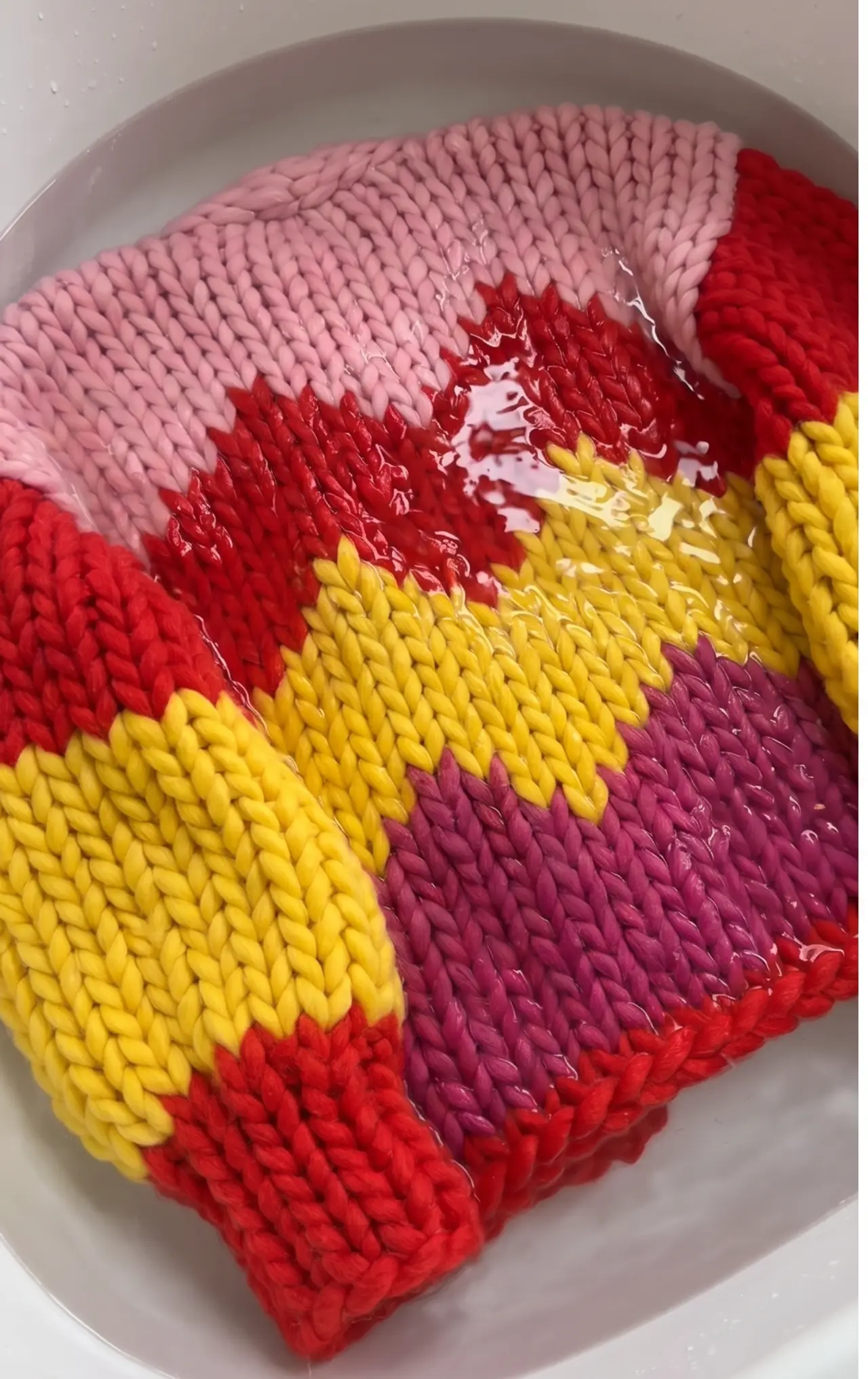
My go-to is to fully immerse the cardigan in warm water with a dash of hair conditioner stirred through. No special wool wash needed, the conditioner alone softens the fibres beautifully as they relax. One honest warning: once it's properly wet, a chunky cardigan will weigh an absolute ton. Do this somewhere that can take the weight, a bath or a big basin, not held up in your arms.
Press out the excess, never wring
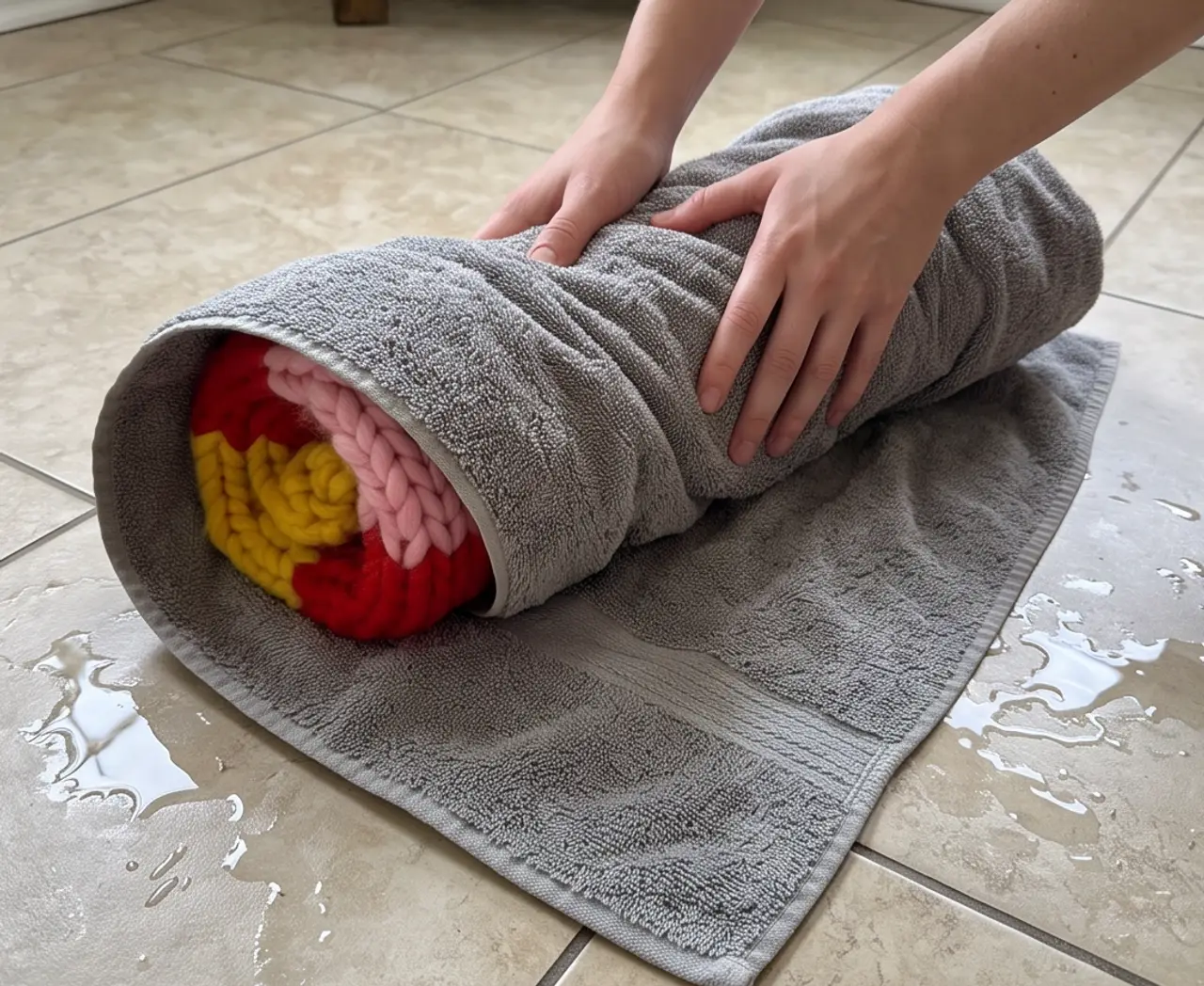
Once it's had its soak, lift it out carefully (again, mind the weight) and press out the excess water rather than wringing it. Wringing chunky wool distorts the stitches unevenly and can felt them in ways you don't want. Instead, roll the whole cardigan up inside a large towel and press down firmly but gently, letting the towel do the work of drawing the water out.
Dry it flat, and be patient
Then comes the part that takes real patience: let it dry completely flat. I'll be honest with you, it takes absolutely forever, chunky wool this dense doesn't dry overnight. But flat is non-negotiable. Hang a soaking-wet cardigan and the weight of the water will pull it out of shape as it dries; laid flat, it holds the shape you've just eased it into.
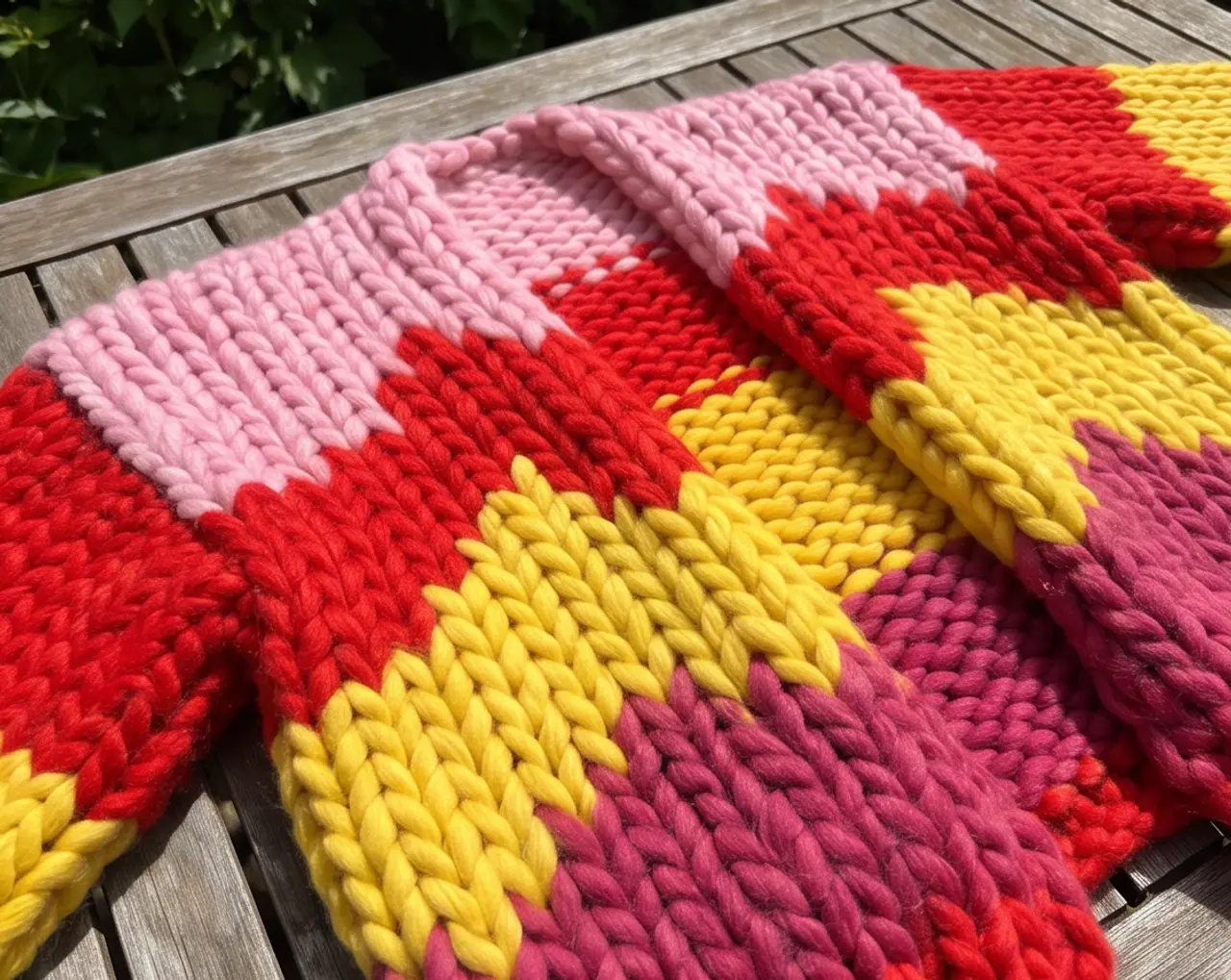
Blocking isn't fixing a mistake. It's the quiet last step that lets the wool settle into the shape it was always going to hold.
In a hurry? The spray alternative
I'll be upfront: a full soak is the gold standard, but it isn't always practical, so I give people the choice. If you don't have a spare day for the drying, spraying the cardigan well with water and easing it into shape by hand is a faster, lighter alternative. It won't settle the fibres quite as thoroughly as a full immersion, but it's a perfectly honest option when time is tight, and it's still far better than skipping the step altogether.
The bit people forget: the upkeep in between
Blocking is a one-off finishing step, but that's only half the answer. The other half is what you do every time you wear it. Because our oversized roving isn't tightly spun, the surface fibres can pile up over time if you leave them be, so stay on top of it: keep a wool comb by the door, and whenever you wear your cardigan, give it a gentle comb and a good shake before you put it on. Little and often is much easier than letting it build up, and it takes seconds once it's a habit. If you're curious whether that piling is actually something to worry about, we've written the honest answer here.
That's genuinely the whole method, and the honest answer to the question we started with: yes, blocking is real and worth doing, not an urban legend. Warm water, a little conditioner, a firm press, and the patience to let it dry flat, done once when it's finished. Then a wool comb and a shake whenever you wear it, and your cardigan will hold its shape for years.

Whenever you're ready to make something, there's a way in that suits you:
Keep reading
Do Chunky Knits Pill? The Honest Answer, and How to Stop It
The other half of aftercare: what really causes piling, and the honest combing routine that keeps it at bay.
Read it next →