The Cast-On That Decides Your Chunky Cardigan
 By Fernando Santos
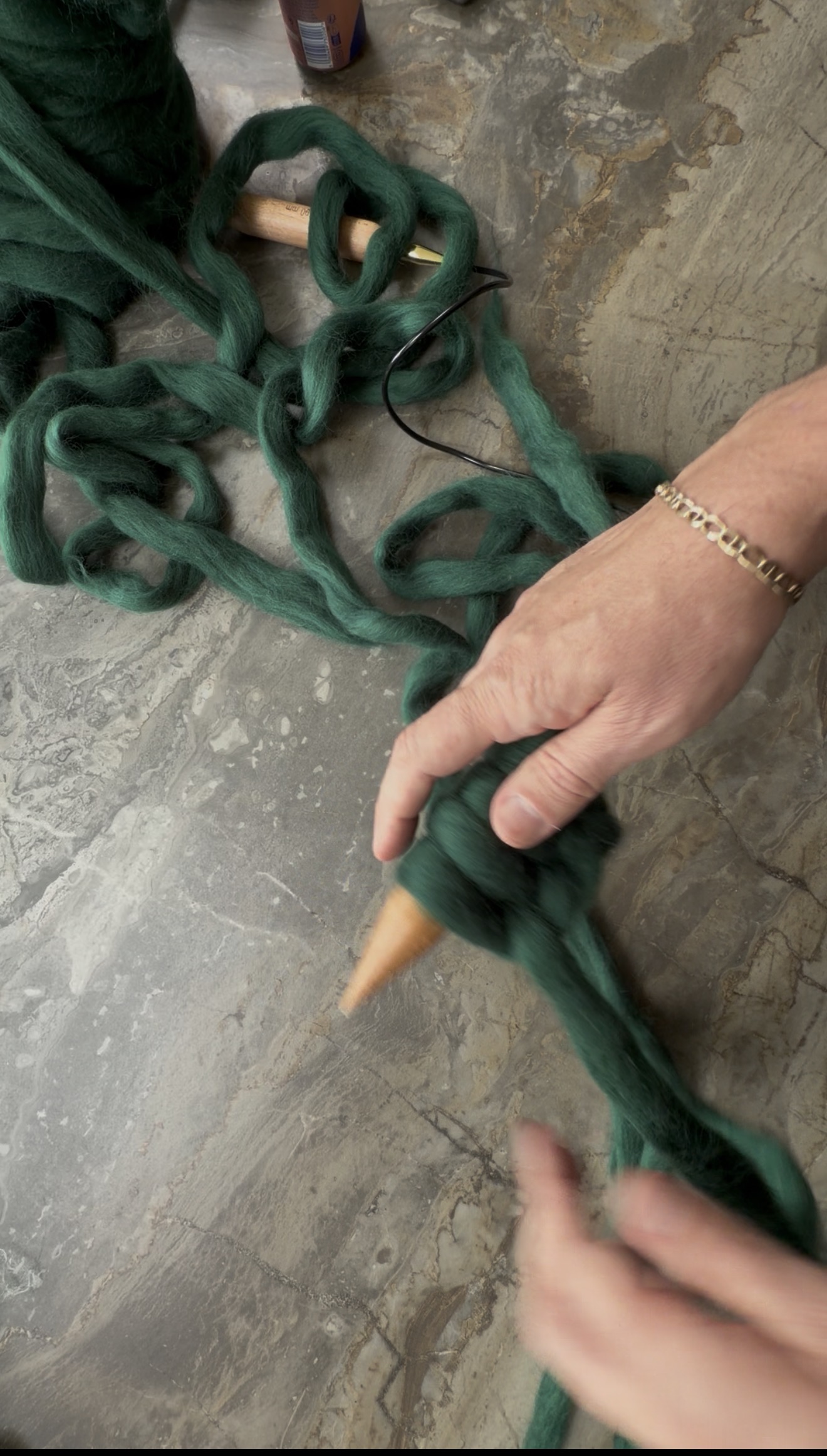
Every cardigan you'll ever knit with us begins with one decision: how to put that very first row of stitches onto the needle. My answer, every single time, is the long-tail cast-on, because it gives you something the others don't.
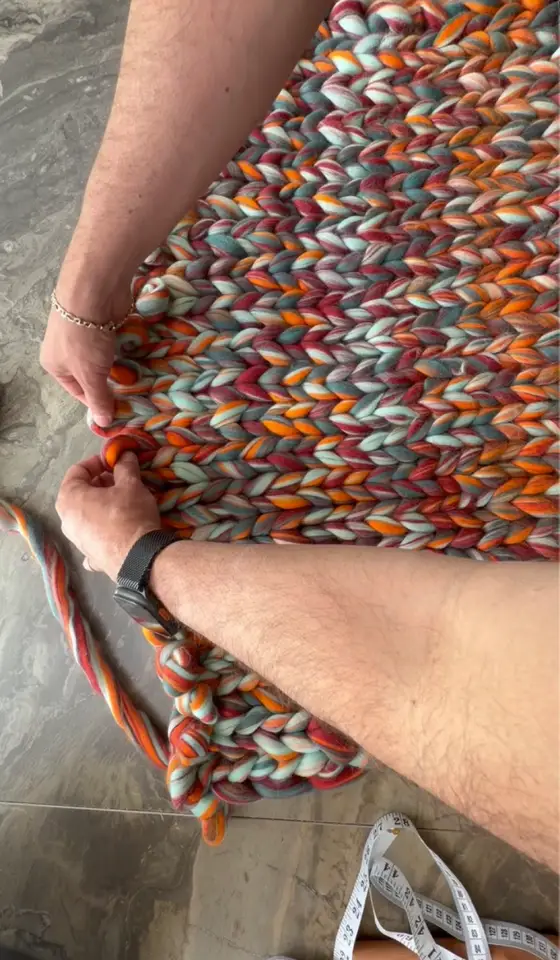
Watch the cast-on in action.
Other cast-ons work; I won't pretend they don't. But the long-tail is the one I reach for, partly because it has a bit of drama to it, and mostly because of what it does for the finished garment. It builds the edge that everything else hangs from. Get the start right and the whole cardigan behaves.
First, the honest bit: it's fiddly
Let's not romanticise it too much. You're working with giant wool on enormous 25mm needles, and a cast-on that size is genuinely awkward the first few times. The loops are big, the needle is fat, and your hands have to stretch around all of it. That's normal. It works; it just isn't the daintiest thing you'll ever do.
There's really only one rule that turns it from frustrating to easy, and I'll say it loudly: keep your loops loose. Tight stitches strangle the needle and you'll fight to knit the next row. Loose, even loops slide along happily. When in doubt, looser.
Keep your loops loose. With wool and needles this big, that's not a tip; it's the whole technique.
Step by step, the chunky way
Here's how I cast on, scaled up for our wool. Take it slowly the first time:
- Measure a long tail. Before your first stitch, pull out a generous length of wool, roughly an arm's span, plus a bit more because thick wool eats it up fast. This tail becomes your cast-on row, so leave more than feels sensible. Running out halfway means starting again.
- Make a slip knot. Where the tail meets the ball, tie a loose slip knot and slide it onto one 25mm needle. That little knot is your very first stitch.
- Set up the hold. Drape both strands over your free hand (the tail over your thumb, the working yarn over your index finger) and pinch the loose ends in your palm. You'll have an open V of wool, like a tiny slingshot.
- Cast on. Dip the needle up under the thumb loop, over to catch the strand on your finger, then draw it back down through the thumb loop. A new stitch lands on the needle. Repeat until you have your count.
- Stay loose. After each stitch, resist the urge to pull it snug against the needle. Let it sit relaxed. Even, airy loops are exactly what you want.
If a written walkthrough isn't clicking, the short video above shows the whole motion in real time, and our full guide to knitting a chunky cardigan picks up right where this leaves off.
My trick: lead with the purl side
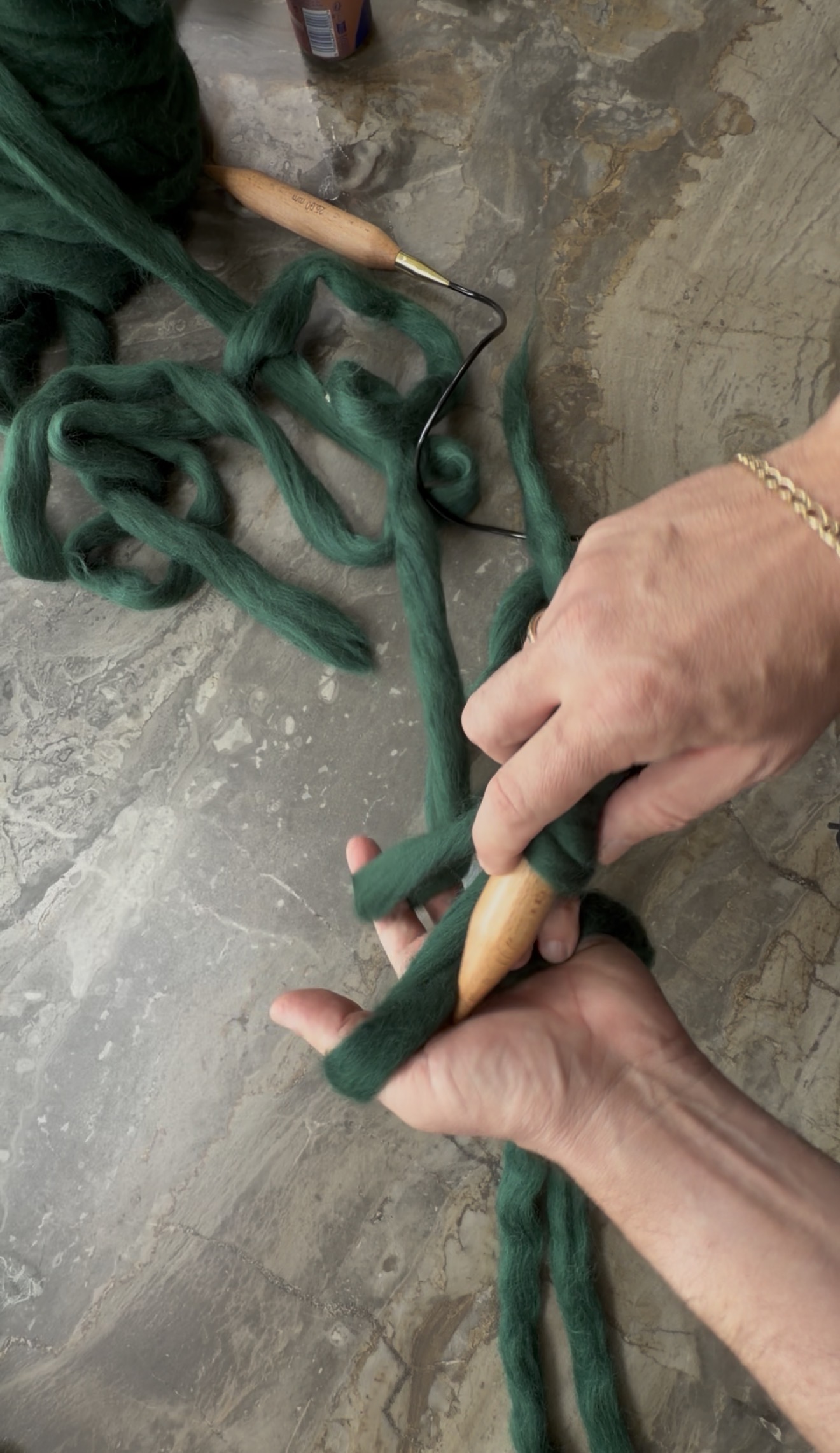
This is the part I actually get excited about. As you cast on, you can choose which face of the stitch sits at the front of your edge, and I deliberately lead with the purl side. It's a small change in how the needle catches the wool, but it changes everything about how the start looks.
Leading with the purl side throws all those plump little bumps forward, and they line up into a raised, chunky ridge along the very bottom of the cardigan. It's more drama, instantly. That ridge then rolls gently in on itself and reads like a designer bolster: a soft, rounded tube of an edge rather than a flat, ordinary hem.
It's not just for show
Here's why I'd never skip it. That rolled spine isn't only a pretty detail; it's doing a job. A chunky cardigan is heavy, and all that weight pulls down on the hem. A thin, floppy cast-on sags under it. The rolled purl-side edge is denser and firmer, so it carries the weight instead of buckling under it.
That's what gives these cardigans their hang: the way the fabric falls clean and straight from the shoulders down to a confident, weighted edge. The perfect drop, as I think of it. It all traces back to those first few loops you put on the needle.
So before you cast on your next one, remember the two things that matter most: keep every loop loose, and lead with the purl side. Everything good about the finished cardigan starts there. If you're still deciding whether this is for you, our note on whether a complete beginner can knit a chunky cardigan is a reassuring read.
Keep reading
The Six Steps to Knitting a Chunky Cardigan (Only Two Are Hard)
Once you've cast on, here's every step that follows: body, sleeves and finishing.
Read it next →