From Sketch to Cardigan: A Colour-Block Design Made Real
 By Fernando Santos
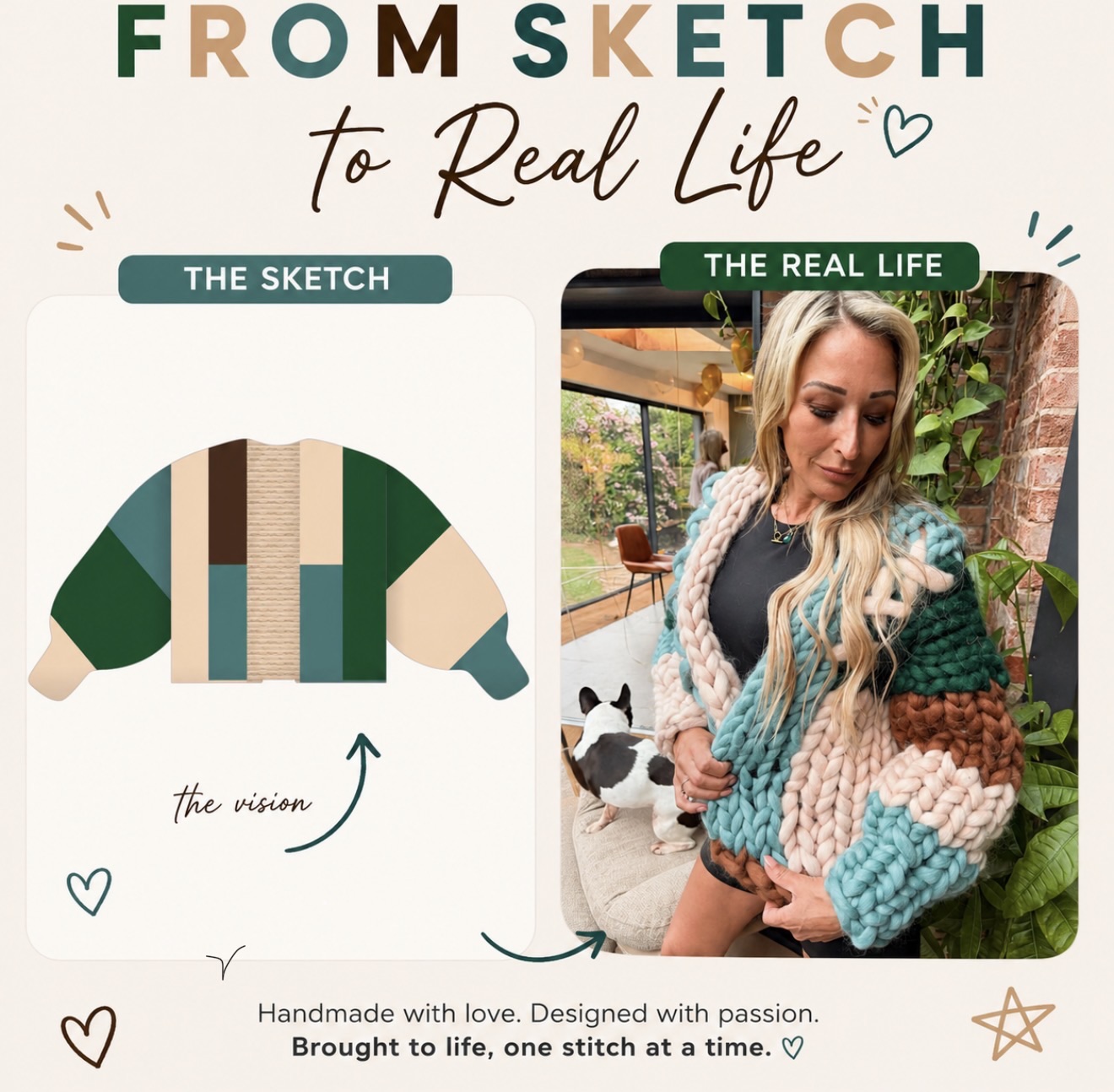
Every cardigan starts life as a flat little drawing on my screen: a few coloured blocks and a vague hope. The strange and wonderful part of this job is what happens after that: when those blocks turn into something you can actually wrap around yourself.
I came to this the long way round. I’m a graphic designer first, with a fine-arts background before that, so I think in colour and composition far more naturally than I think in stitches. This is genuinely only my first season designing knitwear. Some of what follows I’ve learned on purpose; quite a bit of it the wool taught me whether I liked it or not.
The bit that still surprises me
Even now, I sometimes surprise myself. A design can look perfectly nice as a sketch: pleasant, balanced, fine. And then it’s knitted up in giant stitches and suddenly it has presence. It looks far more impressive in real life than it ever did on the screen. Chunky does that. The sheer scale of the stitches flatters almost everything, and the simplest idea ends up looking like a proper statement piece.
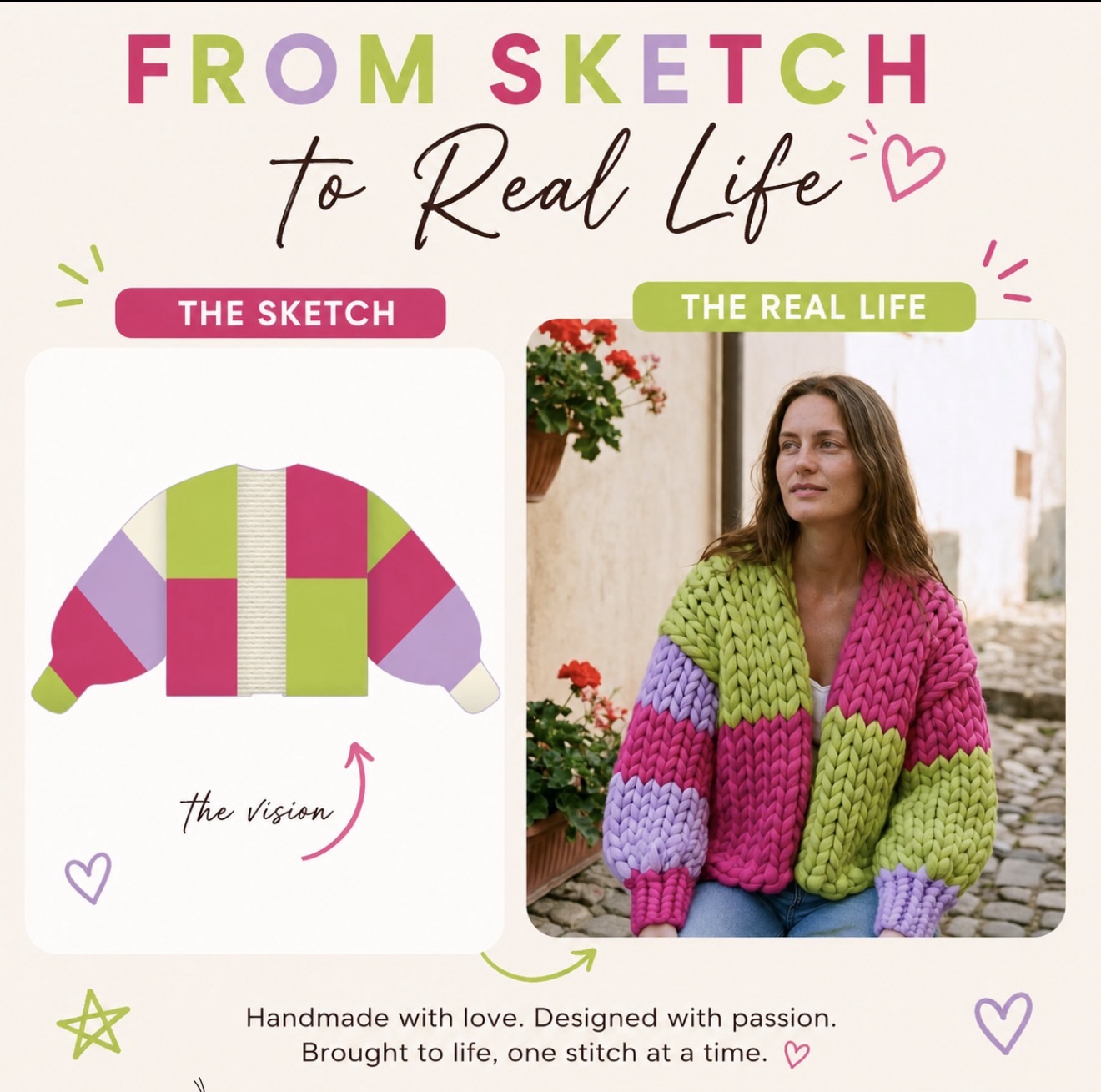
A sketch is a promise. Chunky knitting tends to over-deliver on it.
But not every good idea survives the jump
The flip side is just as true, and worth saying out loud: some designs look wonderful on paper and simply don’t translate. A colour combination that sings as flat blocks can turn muddy once it’s three-dimensional and catching its own shadows. A clever little detail can vanish completely at this scale; the stitches are so big they have their own agenda. A lot of designing for chunky is learning, sometimes the hard way, which ideas are worth knitting and which are better left as a pretty picture.
Where the colour decisions come from
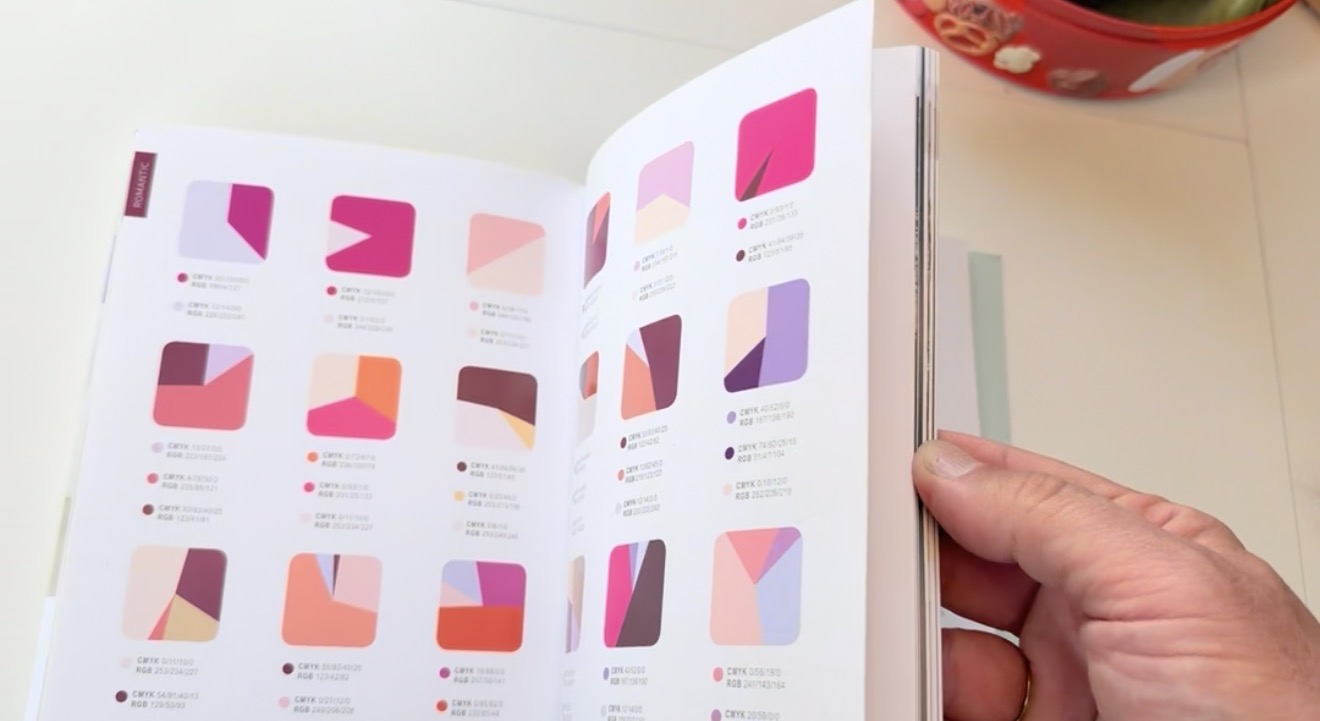
Colour is the part I lean on hardest, and the part my training actually prepared me for. I’m forever pulling palettes apart: which tones quietly support each other, which ones fight, and where to place the single loud colour so everything still holds together rather than shouting. The photo above is me doing exactly that for next season: real swatch books, real colour theory, a lot of squinting.
The honest truth about pastels
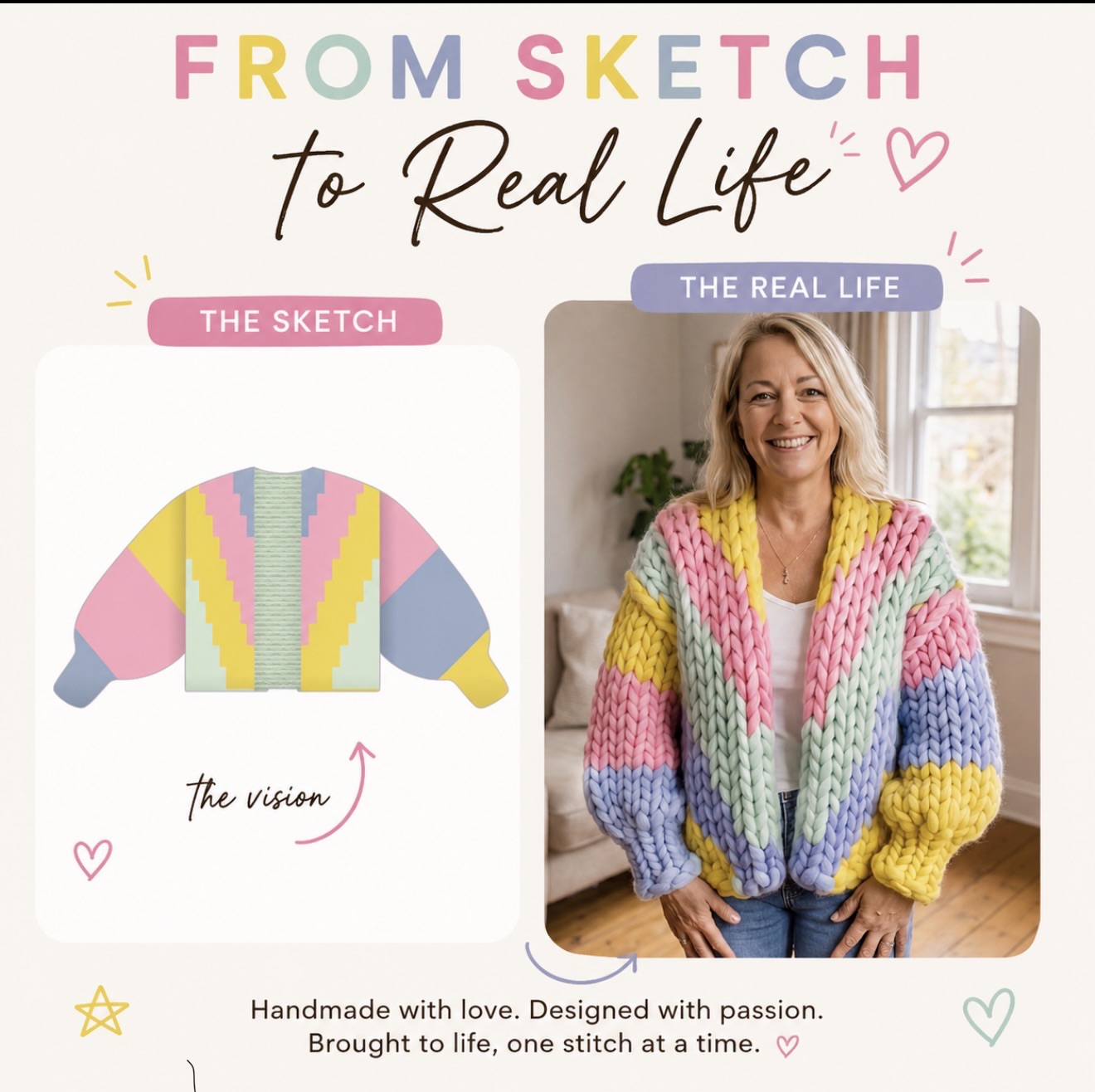
Here’s a confession. When I started, I actively tried to steer away from pastels. I wanted Gigante to feel a bit bolder, a bit more its own thing. But there’s a real expectation around pastels in this corner of knitting (the best-known names in chunky knitwear are practically defined by them) and, plainly, pastels sell better than anything else I make.
So I make them, and I’ve made my peace with it. They’re genuinely lovely, people clearly adore them, and there’s no shame in giving people the thing that makes them happy. I just don’t want it to be the only thing.
What I’m doing about it
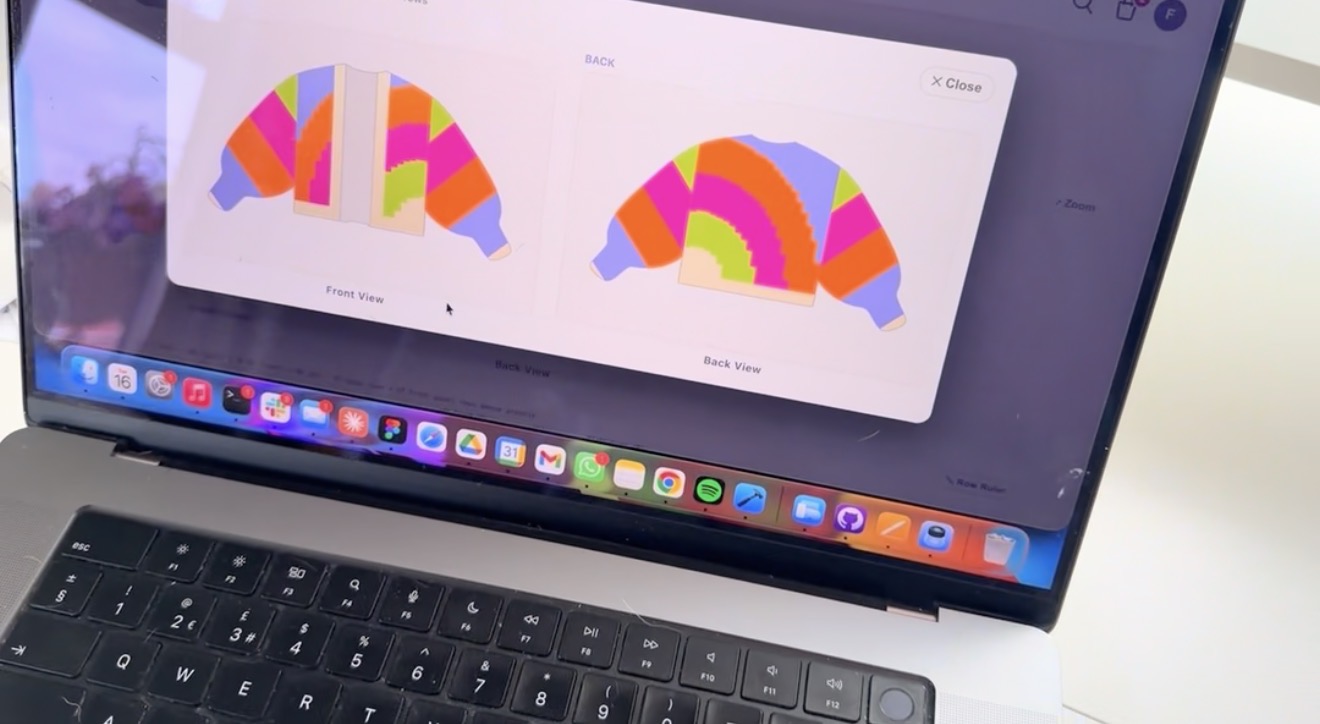
This is where being new is actually freeing. I’m going to keep investing in brighter, braver colours, and the odd quieter, more muted palette too, for the days you want to disappear into your knitting rather than be seen in it. Above is a little sneak peek of one of the new designs I’ve been playing with: louder than anything I launched with, and I love it.
Chunky is festive and dreamy by nature. I want the colours to live up to that.
A question I’m genuinely curious about
Chunky knitting is a cold-weather pleasure: festive, a little dreamy, made for hibernating. So there’s something I don’t yet know, because this is my first winter finding out. When the temperature drops, will people reach for the bright, joyful palettes to cheer the dark months along, or will they want something quieter and softer to wrap up in?
I have my guesses. But really, you’ll be the ones to tell me, one order at a time. (If there’s a colour you wish someone made, do say. Half my best ideas started as somebody’s offhand request.)
Can’t wait for next season? You don’t have to wait for me; the Design Studio lets you play with the colour blocks yourself and knit your own one-of-a-kind version today.
Keep reading
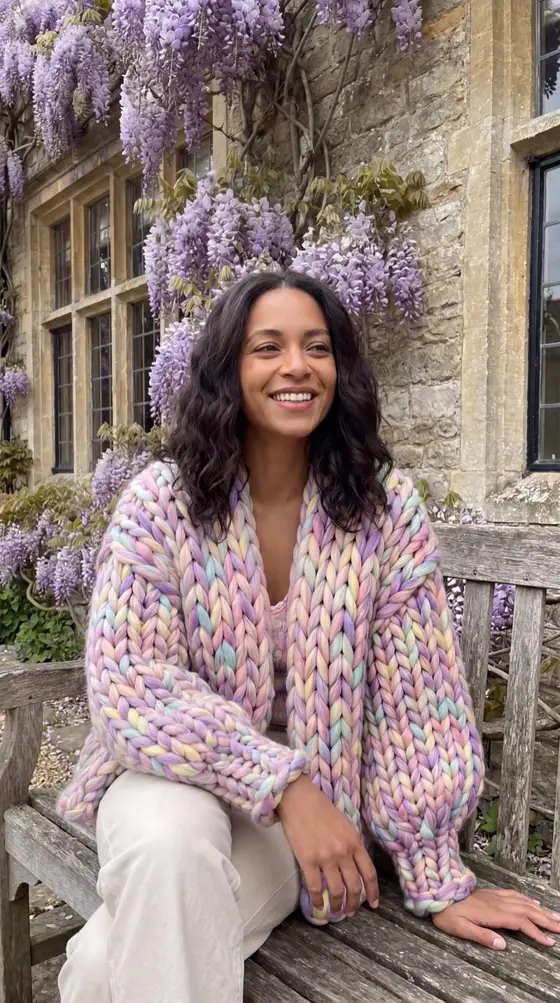
The First Decision That Makes or Breaks a Design-Your-Own Chunky Cardigan
The handful of decisions that actually matter: colour, fit, and where to begin.
Read it next →