Splitting Unspun Wool for Chunky Knitting
 By Fernando Santos
Ever wondered how a messy three-kilo cloud of wool turns into a neat, chunky cardigan you'd actually wear? This is the honest version, every step included. Easiest to just watch it:
The full process, start to finish, in about three minutes.
And this is what's actually happening at each stage, because the magic isn't a machine. It's a slightly obsessive half-hour at my table.
It turns up as a soft, unusable cloud

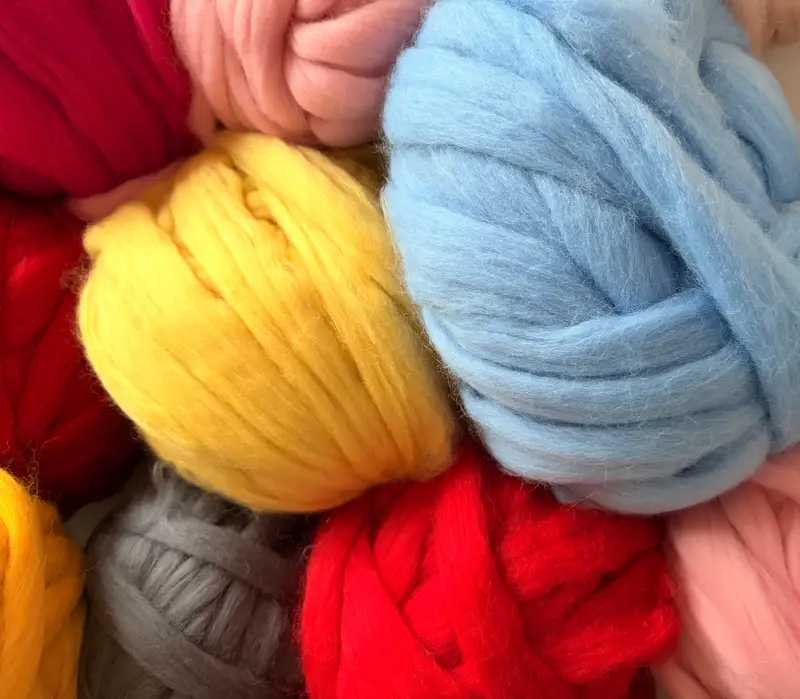
This is how the wool arrives: dyed, but completely unprepped. Thick, lofty, unstructured roving, in loose ropes of fibre that look wonderful and are, honestly, unusable like this. Beautiful for some projects; far too bulky and shapeless for the cardigans we make. Not yet, anyway.
The first time I did it, it went badly

I want to be honest about this bit, because the video makes it look calm. Splitting wool can be a nightmare. The first time I tried it I pulled too hard and the rope came apart in a million pieces. One side came out thin, the other thick. The more I worked at it the worse it got, and that is the trap: overdo it and the fibre gives up. By the end it looked like a row of sausages.
There is no clever tool for this. It is your hands and knowing when to stop. Pull too fast and it snaps, and then you are sat there joining the ends back together with a felting needle. Fuss over it and you crush the loft out of the very thing you were trying to protect. And wool loves itself: static builds up, the two strands you have just separated find each other again, and what you have in your lap is a tangle rather than a ball. There is fluff over the whole room too, which nobody warns you about.
It takes me about twenty five minutes a kilo now, because I do it constantly. A first attempt is not twenty five minutes. It can be hours.
So here is my honest advice, if what you actually want to do is knit: leave that part to me. Plenty of people sell unspun roving. Not many prepare it before it ships, and I am quietly proud to be one of the ones who does. We do the messy bits. You do the knit.
One strand becomes two

So I unroll it, untie it, and split it down the middle. One thick strand becomes two: instantly lighter, instantly closer to something you could actually wear. It's the first moment the cloud starts to look like yarn.
Then I comb it by hand. Then I do it again.

Next I smooth every length by hand, almost like combing, coaxing the fibres into line so the yarn flows properly the moment it hits the needles. Then I do it all a second time.
The second combing is the bit you can feel.
That second pass is precisely what gives the wool its structure, and that cloud-soft feel you get when you finally pull the finished cardigan over your head. Every strand goes where it should, and every bit that doesn't belong gets picked out by hand. For a single bundle, that's about half an hour of quiet, fiddly work.
I'm not going to pretend it's quick, or that a hand-knit lasts forever; nothing does. But prepped like this, the wool holds its shape, resists pilling, and earns its place in your wardrobe for years. That's the trade: a slow half-hour now, for a cardigan that doesn't give up on you.
Shaped, weighed, labelled

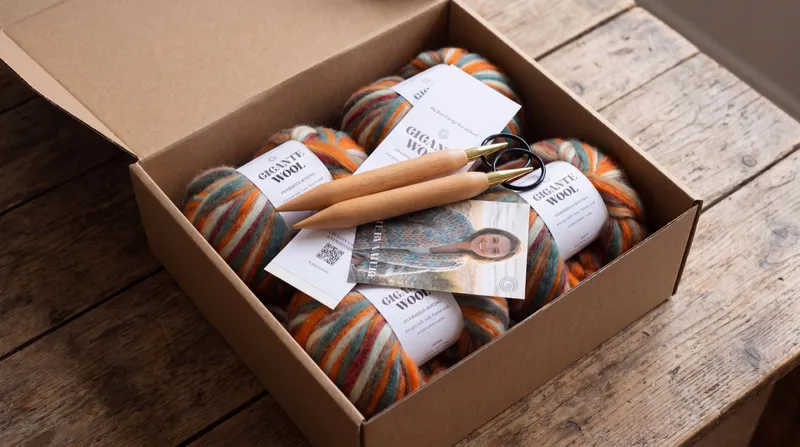
Once it's combed, I wind it into nests, with no tangles, ready to knit straight from the bundle. Each one goes on the scale until it reads exactly 500 grams. Not roughly, exactly. Then it's labelled (in this case, merino blend, 500g) and the job's done.
From a heap on the table to something you live in
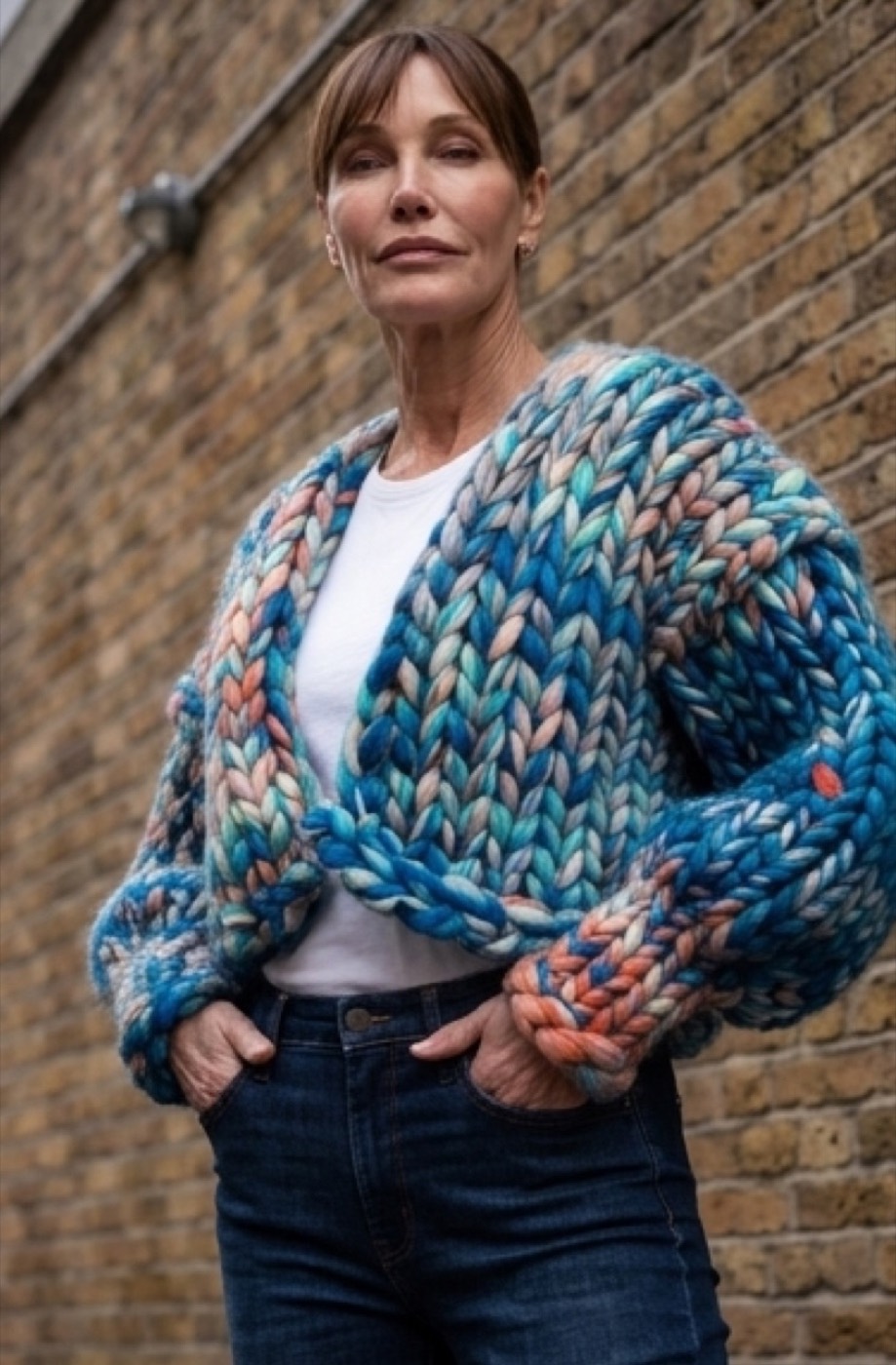
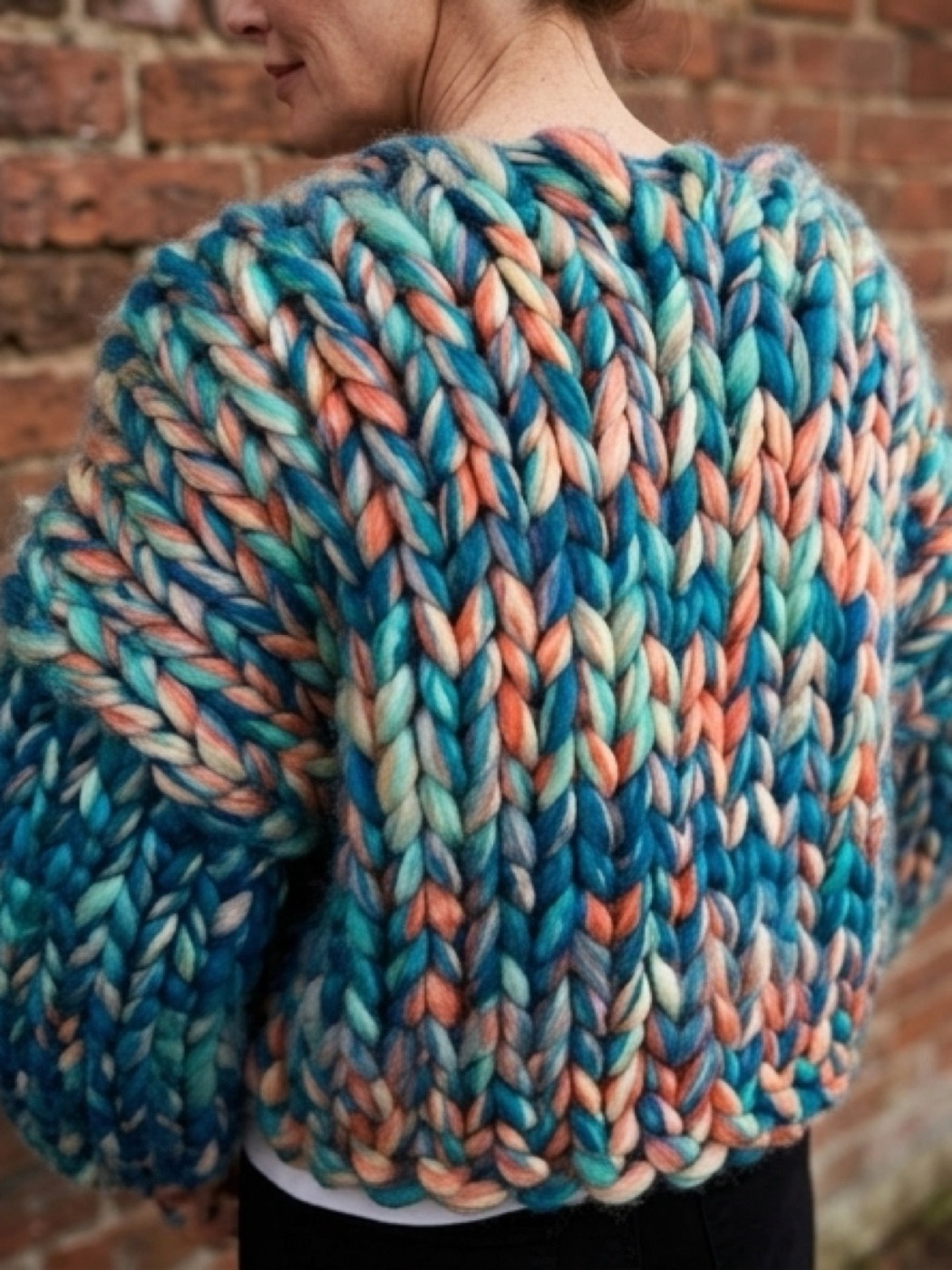

And that's the trick. The same fibre you just watched come out of a messy heap becomes a handknit, gigantic cardigan, the kind of thing you reach for on a cold morning and don't take back off. A cloud of wool, a little patience, and your own two hands. Or ours.
Fancy one of your own?
Whether you want to knit it, get it in a box, or simply have the wool in your hands, pick whichever suits you:
Keep reading

The Real Reason Everyone’s Suddenly Obsessed With Chunky Knitting
Oversized stitches, cloud-soft wool and a slower rhythm that feels like calm.
Read it next →